Why is the Adriatic Sea so blue? The secret of crystal-clear water from a sailor’s perspective
The crystal-clear water of the Adriatic is one of Europe’s most unique natural treasures. The color of the water is shaped by several factors that few people know about.
The sea is not actually blue
As strange as it may sound, water does not have a blue color on its own. The reason we still see the sea as blue is that the different colors of sunlight do not behave in the same way in water. Water largely absorbs red, orange, and yellow light, while a larger part of blue light is reflected back toward our eyes. This is why the sea appears brilliantly blue, especially on a sunny summer day. This is also why the same sea can look completely different in the morning, at noon, and at sunset.
The Adriatic Sea’s unique blue and turquoise shades are not a coincidence. The color of the water is shaped by several natural factors that few people know about.
Interesting fact: The higher the Sun is in the sky, the more intense the colors of the sea appear. This is why the turquoise and deep blue shades are at their most vivid around noon.
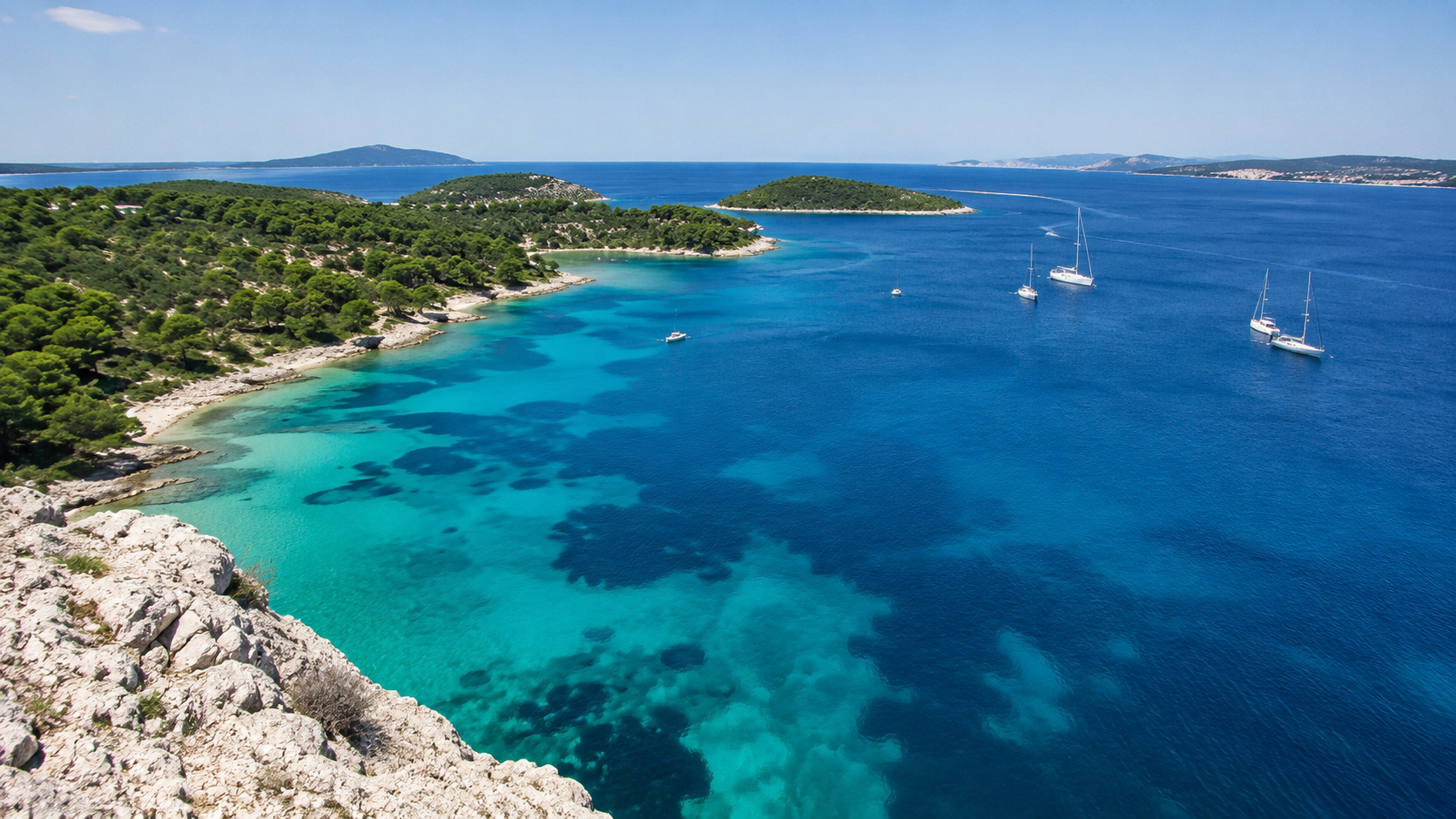
Why is one bay turquoise, while just a few hundred meters away the water is already deep blue?
The most important reason for this is the depth of the water. In shallow areas, sunlight reaches all the way down to the seabed, which reflects the light. The light-colored limestone and white pebbles that are typical of the Croatian coast reflect sunlight particularly well, which is why the water in many places appears almost glowing turquoise. As the sea becomes deeper, less and less light reaches the bottom, so the water gradually turns dark blue. This is also why, while sailing, you can often see with the naked eye where the sea starts to get deeper.
The Adriatic is so clear because nature also “helps”
Many people think that crystal-clear water is due only to the low level of pollution. This is true, but only partly. A large part of Croatia’s coastline is rocky and pebbly, so the waves do not stir up large amounts of sand or silt. In addition, relatively few large rivers flow into the Croatian coastline, so less sediment enters the sea. The nutrient content of the water is also lower, so algae growth is less common, which also contributes to the excellent transparency. Under favorable weather conditions, visibility in the Adriatic can reach depths of up to 30 meters, and in the open sea, underwater visibility can be even greater.
The color of the water is also important information for sailors
Experienced sailors pay attention not only to navigation instruments, but also to their surroundings. Lighter turquoise water often indicates shallower areas, while darker blue shades usually mean deeper water. Greenish or brownish discoloration can often suggest marine vegetation, sediment, or a nearby river mouth. Of course, these are only signs that help with orientation. The basis of safe boating is always the nautical chart, navigation equipment, and careful boat handling.
Did you know?
The Adriatic is saltier than most seas. The average salinity of the Adriatic Sea is around 3.8%, which is slightly higher than the average salinity of the world’s oceans. Higher salinity, low amounts of suspended sediment, and clear water all contribute to the special color palette that makes many people consider the Croatian sea one of the most beautiful coastlines in Europe.
The Adriatic is not equally blue everywhere. Although many people think of it as uniform, the color of the Adriatic also changes from area to area. Along the rocky shores of the Istrian Peninsula, deep blue shades often dominate, while in shallow, pebbly bays, for example along many parts of Dalmatia, you can see almost glowing turquoise water. The time of day, wind, waves, and even cloud cover can completely change the color of the sea within just a few minutes.
This is exactly what makes every boat trip unique. You rarely see the same bay twice in exactly the same colors.
Get on the Water with Us!
At Sidro Nautika, we teach you safe boating so that you know what to do in every situation. Although stories of ghost ships are exciting, the best experience is when you return to the harbor as a confident captain. Whether it is a boating course, sailing training, or a motorboat course, with us you can build on solid foundations.
If sea adventures attract you, you can apply for the Skipper C course, which we hold directly in Rijeka and Split, in a real maritime environment. This is the training that allows you to legally navigate on any ocean and sea in the world.
Looking for a faster inland and sea option? There is the ICC+B category, which you can obtain with us in just one exam day. This license is valid not only in Hungary but also in many European countries, making it suitable for boating both on Lake Balaton and along the Croatian coast.
Our offer also includes Yachtmaster A and Yachtmaster B, full maritime navigation training, as well as the opportunity to complete practical-focused sailing maneuvering training and obtain a motorboat license. In addition, our boating license prices and motorboat training prices are transparent, so you know exactly what to expect.
👉 See the trainings in detail here: