

Lighthouses, Legends, and the Art of Navigation
For centuries, lighthouses have symbolized hope, safety, and the journey home. Even in today’s age of GPS navigation, these iconic structures remain vital points of reference when technology fails and captains must rely on the sea itself.
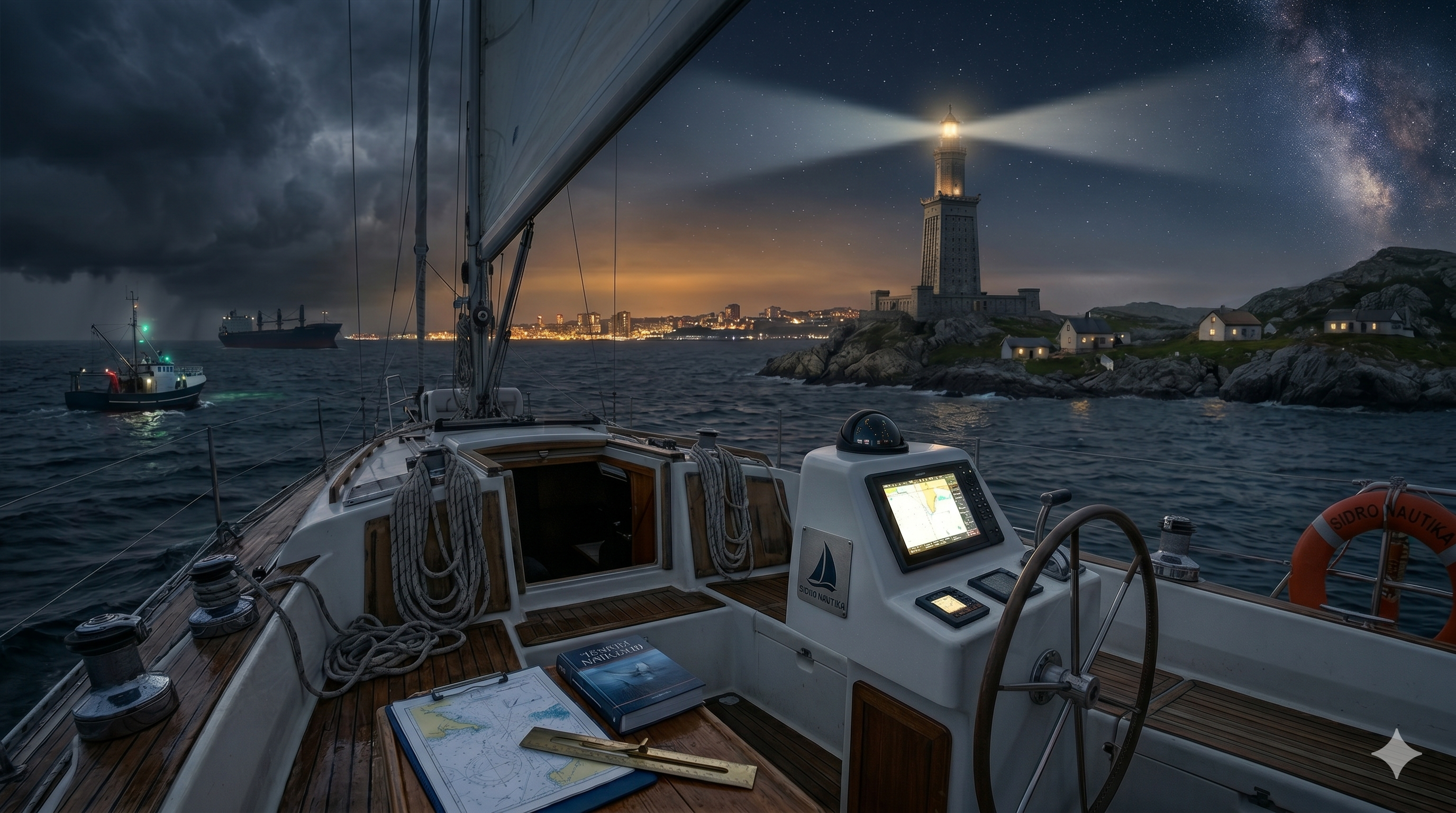
Guardians of the Ocean - Lighthouses, Navigation
From Ancient Giants to Modern Technology
The history of lighthouses stretches back to antiquity. The most famous of all was the Lighthouse of Alexandria, built in the 3rd century B.C. As one of the Seven Wonders of the Ancient World, it guided mariners with a height of over 100 meters. Back then, massive wood fires burned atop the tower, and the light was projected into the distance by polished bronze mirrors.
Technology in lighthouse construction evolved immensely through the Middle Ages and the early modern period. The real breakthrough came in the 19th century when Augustin-Jean Fresnel invented the lens named after him. This unique, ring-structured lens was capable of focusing scattered light into a single parallel, razor-sharp beam, making lighthouse lights visible from as far as 30-40 nautical miles away. When you spot the first flashing light on the horizon during a night watch, you are actually seeing the legacy of this brilliant invention.
Legends and the Solitary Life of Lighthouse Keepers
Countless legends are associated with lighthouses. Take, for example, the Veli Rat lighthouse in Croatia, one of the most beautiful structures in the Adriatic. According to local legend, the tower's walls were painted white with lime mixed with thousands of egg yolks to better resist the salty sea wind and the vagaries of weather – and indeed, the plaster still endures to this day.
But it was not just the buildings, but the lives of the people working there, the lighthouse keepers, that were extraordinary. This profession demanded total isolation, extreme discipline, and immense responsibility. Keepers had to ensure that the light did not go out for even a minute, even amidst the wildest storms, as the fate of hundreds of ships could depend on them. While most lighthouses are automated today, one can still find towers on the Croatian coast where the same family has kept watch for generations.
Why Do We Still Need to Learn About Lighthouses Today?
Many people ask during our courses: "Why do I still need to know lighthouse lights if I have a chart plotter on my boat?" The answer is simple: safety at sea is based on redundancy.
- Technical Failure: Electronics can break, batteries can run out, and GPS signals can be jammed. In such cases, a paper map and knowledge of lighthouses can save the ship.
- Identification: During night navigation, coastal lights (cities, cars, buoys) can appear chaotic. The unique rhythm of lighthouse flashes helps you determine precisely where you are.
Every lighthouse on nautical charts has its own so-called characteristic. For example: Fl(3) WR 15s 20m 15/10M. This code reveals to us:
- How many times it flashes (Flashing).
- What color the light is (W=White, R=Red).
- At what interval the cycle repeats (15s).
- How high it is (20m).
- From how far it can be seen (15/10 nautical miles).
The Language of Colors
The most exciting navigational tools are sectored lighthouses. These do not radiate the same color light in all directions. They are set up so that if your boat is moving in the safe, deep-water channel, you see a white light. However, if you wander off and drift towards reefs, the light color suddenly turns red or green. This is a visual stop sign for the captain: "Immediately return to the white sector!"
Sail with us! Build on a firm foundation!
At Sidro Nautika, we teach you safe navigation so that you know what to do in every situation. Whether it's a boat course, sailing training, or a motorboat course, you can build on a firm foundation with us.
If you are drawn to sea adventures, you can apply for our Skipper C, held directly in Rijeka and Split in an authentic maritime environment. This is the certification that allows you to legally captain a vessel on any ocean or sea in the world.
Are you looking for a faster inland and coastal option? Our ICC+B can be obtained in just one exam day. This license is valid not only in Hungary but also in many European countries, making it perfect for sailing on Lake Balaton or the Croatian coast.
Our portfolio also includes Yactmaster A and Yactmaster B which offer full maritime navigation training, as well as practical-focused sailing maneuvers and motorboat licenses. Furthermore, our pricing for boat and motorboat licenses is completely transparent, so you know exactly what to expect.
👉 Check out the details of our courses here: