

A Night at Anchor – What Is It Like to Sleep on a Boat in a Quiet Bay?
What is it like to spend a night at anchor in a quiet bay? Discover evening life aboard, essential preparations and the joy of waking up surrounded by sea.
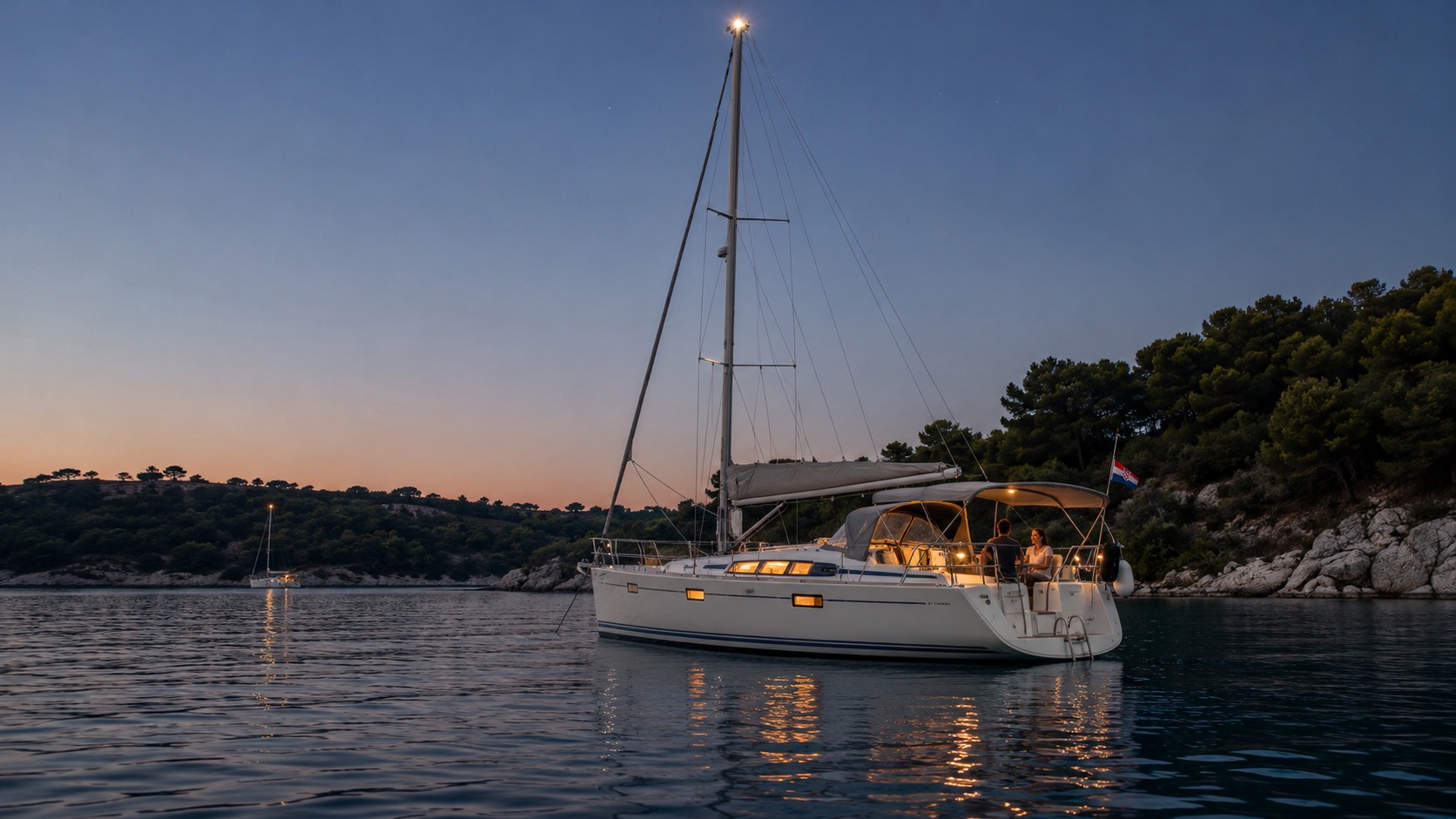
Evening Calm in an Adriatic Bay
From an Afternoon Swimming Spot to a Home for the Night
Earlier, everyone was taking turns jumping into the water. Snorkelling masks came out, someone sat on the swimming ladder, and others dried off on deck. As the sun drops lower, some of the boats that stopped for a swim move on, and the atmosphere begins to change. You start noticing the cicadas ashore, the clink of cutlery and a conversation drifting across from another boat. Sound carries over water, so keeping the evening peaceful means being considerate of your neighbours, too. Dinner on board can be wonderfully simple: pasta, a salad and a few slices of bread may be all you need. By the time you clear the table, the turquoise water has turned dark, with reflections stretching out beneath the boats’ lights. Someone reaches for a jumper, another gets comfortable in the cockpit, and the conversation continues. Nobody needs to check when it’s time to head back to the hotel.
On Your First Night, Every Sound Is New
“Was it making that noise before?” It’s a question you may well hear on a first night at anchor. Lying in your cabin, you notice the water against the hull, the rattle of something left loose and the boat’s gentle movement. Sounds you barely registered during the day suddenly catch your attention. Some people find the rocking soothing; others need a little time to get used to it. Before bed, it helps to secure loose items, put a warm layer within reach and know where your torch is. Getting up in the dark feels much easier when you know where everything is. Step out onto the deck, and the bay looks different again. The shoreline is a silhouette, while a handful of lights mark the boats around you. Away from bright coastal lighting, a clear sky can reveal far more stars than you’re used to seeing at home. You might have come up for a moment, only to find yourself staying a little longer.
A Peaceful Night Starts in the Afternoon
The decision to stay overnight is best made while it’s still light. A lovely swimming spot isn’t automatically a suitable place to spend the night. The skipper needs to consider the forecast through to morning, the bay’s shelter, water depth, seabed and the movements of nearby boats. A spot that feels protected in the afternoon may become exposed if the wind changes direction. There also needs to be enough room for boats to swing safely around their anchors. Arriving in daylight gives you time to understand your surroundings, check that the anchor is holding and plan where to go if conditions change. The appropriate lights and a backup plan should also be sorted out before darkness falls. As a guest, you may only notice a few checks and a short conversation, but these preparations help make the evening comfortable. The skipper’s responsibility continues overnight: anchors can drag and weather can change, so the boat’s position needs regular monitoring. An electronic anchor alarm can help with this. Having an experienced skipper aboard is particularly valuable on your first overnight stay. It also gives you a chance to see how they choose an anchorage, what they check and how they decide whether to stay.
A Morning Worth Waking Up Early For
Most of your companions are still asleep when you step quietly onto the deck with your coffee. It’s the same bay you arrived in yesterday, yet everything looks different. The sun is just reaching the shore. Someone on a nearby boat is tidying up, while an open cabin door is the only sign of life on another. You sit down, watch the water and let your coffee cool a little. Gradually, the others appear. Someone starts looking for breakfast; someone else asks whether you could stay another hour. Suddenly, your planned departure feels less urgent. A night at anchor can become one of the most memorable parts of a boating holiday: the conversation over dinner, the unfamiliar sounds as you fall asleep and the view from your cabin in the morning. If you’d like to experience it as the skipper one day, you’ll need practical experience alongside boat-handling, weather, navigation and anchoring skills.
Get on the Water with Us!
At Sidro Nautika, we teach you safe boating so that you know what to do in every situation. Although stories of ghost ships are exciting, the best experience is when you return to the harbor as a confident captain. Whether it is a boating course, sailing training, or a motorboat course, with us you can build on solid foundations.
If sea adventures attract you, you can apply for the Skipper C course, which we hold directly in Rijeka and Split, in a real maritime environment. This is the training that allows you to legally navigate on any ocean and sea in the world.
Our offer also includes Yachtmaster A and Yachtmaster B, full maritime navigation training, as well as the opportunity to complete practical-focused sailing maneuvering training and obtain a motorboat license. In addition, our boating license prices and motorboat training prices are transparent, so you know exactly what to expect.
If you already have a boating license and are looking for a boat for your next holiday, check out our sea boat rental options and choose from several thousand available boats!